In 1854, London faced a severe cholera outbreak in the Soho district. Hundreds of people were falling ill, and the dominant explanation for such diseases was still tied to the miasma theory—the so-called “bad air.” It was in this context that the English physician John Snow decided to look at the problem differently.
Considered today the father of modern epidemiology, Snow was already a brilliant mind in Victorian medicine and a pioneer in the use of anesthetics, having even administered chloroform to Queen Victoria during childbirth. Faced with the Soho crisis, he decided to challenge the conventional wisdom of the time: instead of accepting the “bad air” theory, the physician suspected that the answer to the spread of cholera lay in something far more tangible and shared by the entire community: water.
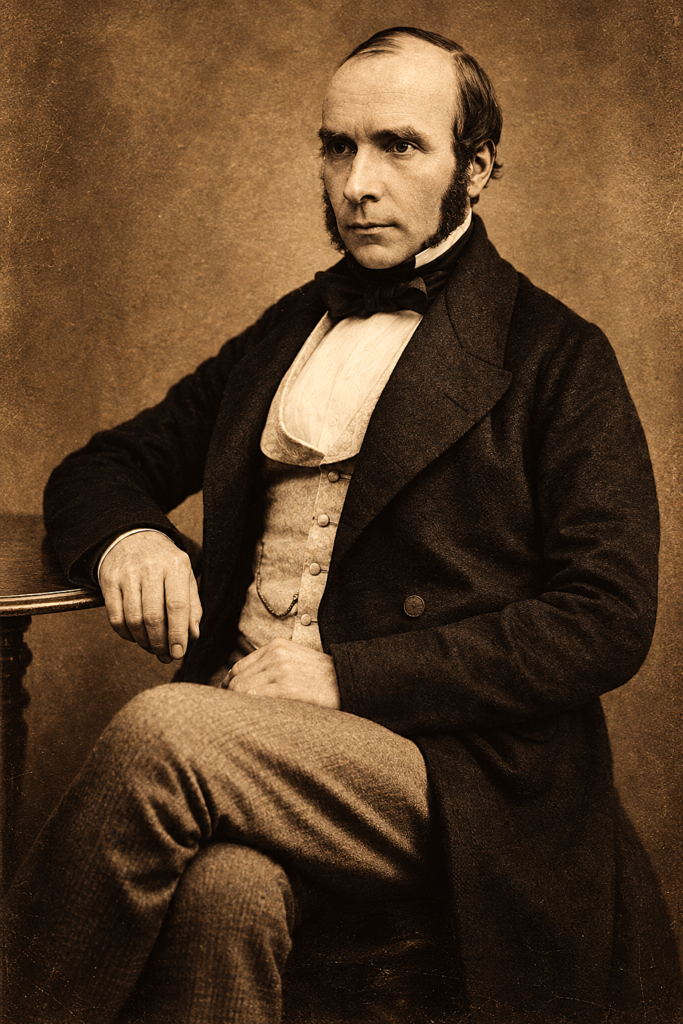
Instead of looking only at the effect—people getting sick—Snow searched for what might be happening beforehand. He analyzed where the victims lived, investigated where they got their water, and noticed a heavy concentration of cases around the public pump on Broad Street. After presenting his evidence, local authorities removed the pump’s handle.
The story is more complex than the popular version often suggests. Removing the handle did not, by itself, prove Snow’s entire theory, nor did it instantly end the epidemic. Even so, his work became a milestone because it demonstrated the value of looking for earlier connections when we are faced with a result that seems to appear suddenly before us.
This story always makes me think about a simple question: how often do we look only at the effect because it is the most visible part of what happened?
It is precisely this question that leads us to the Sixth Principle presented by The Kybalion: Cause and Effect.

What Does the Principle of Cause and Effect Really Teach?
The Kybalion summarizes the principle with the statement:
“Every Cause has its Effect; every Effect has its Cause.”
Within the system presented by the book, events do not exist completely in isolation. What we see as an effect is connected to earlier conditions and can, in turn, become part of what happens next.
The Kybalion itself uses the example of a stone that breaks loose from a mountain and strikes a house. At first glance, we might simply say that the stone fell. But if we begin to investigate, we will find rain, erosion, geological conditions, and countless other earlier circumstances that contributed to that moment.
This example helps us recognize something important:
An effect rarely begins at the moment we are able to see it.
This, however, does not mean that we know every cause. When The Kybalion states that what we call “chance” is related to unrecognized causes, it is making a claim within its own philosophical system. We should not turn this into the belief that we are capable of discovering a hidden explanation for everything.
A professional outcome, for example, may involve preparation, opportunity, previous decisions, economic conditions, other people, and factors that we may never be able to fully identify. Saying that causes exist does not give us permission to invent them.
Not knowing the cause of something is different from being certain about what caused it.
No Longer Being Only an Effect
I would say that one of the most interesting ideas in the chapter is that the Hermetic student seeks to become less passive in the face of influences and more capable of setting causes in motion.
I do not interpret this as a promise of controlling everything that happens. On the contrary, perhaps the most useful application is precisely to recognize the limits of our control and ask where there is still room for participation.
Imagine someone waiting for motivation before starting a project. Motivation may or may not appear tomorrow. But that person can choose to work for fifteen minutes today. Someone experiencing financial difficulties may not be able to increase their income immediately, but they can begin by tracking expenses or organizing what they already have.
The question is no longer only:
“Why is this happening to me?”
and begins to include:
“Within the situation that exists, what can I still set in motion?”
This shift may seem small, but it changes our position in relation to the problem.

Responsibility Does Not Mean Blame
This distinction is essential. Cause and Effect does not mean that a person caused everything that happened to them. Illness, trauma, poverty, unemployment, accidents, and injustices can involve biological, social, economic, and environmental factors, as well as decisions made by other people over which we have little or no control.
For this reason, I consider it dangerous to use this principle to say things like “you attracted this” or “your mind created this situation.” Besides not being a necessary conclusion of the principle, this interpretation can turn reflection into blame.
There is an important difference between blame and practical responsibility.
Blame says:
“Everything happened because you caused it.”
Practical responsibility asks:
“Given what happened, is there any part of the next response that still depends on me?”
A person may not have caused their layoff, for example, but they can still update their resume, talk to contacts, develop a skill, or temporarily reorganize their finances.
None of these actions guarantees the next result. They simply become part of the chain of conditions that will help shape what comes next.
Small Causes Can Create Large Chains
We often think that an important transformation must begin with an equally dramatic action. In practice, many effects are built through small, repeated causes.
Saving a small amount regularly does not transform a financial situation overnight, but it can begin a process of accumulation. Studying for twenty minutes a day does not produce immediate mastery, but it creates repetition. Working a little on a project every day does not guarantee success, but it keeps it from remaining only an intention.
We can visualize this process like this:
Intention → Action → Repetition → Consequence → New Context
The new context, then, creates new possibilities.
This also connects Cause and Effect to the previous principle, Rhythm. Rhythm showed us that there are phases we do not always control. Cause and Effect adds another question: what can we do within the phase we are in?
Not every cause produces an immediate effect, and not every correct action guarantees exactly the result we expect. Sometimes it will be necessary to persist; at other times, to revise the strategy. The principle does not need to be turned into a formula that guarantees results, but it can serve as a way to observe more carefully what we repeat.
Returning to John Snow: Find the Accessible Link
John Snow could not control all the conditions involved in the cholera epidemic. He could not rebuild London’s sanitation system on his own, nor did he possess all the microbiological knowledge that would be developed later.
But he was able to investigate a specific point in the chain where intervention was possible.
This is the part of the story that I find most useful for our application of the principle. We do not always need to understand or change everything. Sometimes, we need to find the accessible link.
When facing a problem, the question may not be:
“How do I solve this entire situation right now?”
But:
“What is the point in this chain where my action can truly make a difference?”
Practice: Find the Next Link
Choose a situation you would like to change and work through this exercise in four steps.
1. Describe the current effect.
Be specific. Instead of “my financial life is bad,” write something like “I do not know where part of my income is going.”
2. Identify the earlier factors.
Ask: “What contributed to bringing me here?” Include both internal and external factors without looking for a single cause.
3. Separate what you control from what you merely influence.
You may not be able to change the economy, another person, or a decision that has already happened. But there may still be some possible action within that context.
4. Choose a small cause.
It could be tracking expenses for a week, dedicating a few minutes each day to a project, or starting a conversation you have been postponing.
Then ask:
“What future effect am I trying to help build with the cause I choose today?”
The goal is not to predict the future. It is to identify where you can still participate in it.
Not Everything Is in Our Hands, but We Can Still Participate
Perhaps the most useful interpretation of the Principle of Cause and Effect is not to imagine that we control everything. In fact, it may begin precisely when we recognize that we do not.
We are influenced by events, other people, social structures, economic conditions, and circumstances that we often did not choose. But that does not mean we are merely spectators.
John Snow did not control the entire chain that produced the epidemic. He looked for a point where his investigation and his actions could enter that chain.
We can do something similar on our own scale.
We do not need to be the cause of everything in order to become a cause of something.
And perhaps this is the question worth carrying with us:
What small cause can I set in motion today to participate in what I hope to encounter tomorrow?
In the next study, we will arrive at the Seventh Principle of The Kybalion: Gender, exploring its relationship with generation and creation and distinguishing this concept from biological sex or social roles.
If you would like to continue following our journey through the Seven Hermetic Principles, explore the other studies available on the website, discover our e-books, and, for more in-depth content, also join our Patreon community.